
Abstract
Background. Multiple myeloma (MM) is a heterogeneous hematologic malignancy with highly variable clinical outcomes. In recent years, inflammation- and nutrition-based biomarkers derived from routine laboratory tests have gained attention as practical prognostic tools. The lymphocyte-to-albumin ratio (LAR) reflects both immune status and nutritional/inflammatory balance. This study aimed to evaluate the prognostic significance of baseline LAR in patients with multiple myeloma.
Methods. This retrospective study included 200 patients diagnosed with multiple myeloma and followed at our center. Absolute lymphocyte count (×10⁹/L) and serum albumin level (g/dL) at diagnosis were obtained from medical records. The lymphocyte-to-albumin ratio was calculated by dividing the absolute lymphocyte count by the serum albumin level. Patients were stratified into two groups according to the median LAR value (low LAR vs. high LAR). Baseline demographic characteristics, disease-related features, and treatment outcomes were compared between groups. Overall survival (OS) and progression-free survival (PFS) were analyzed using the Kaplan–Meier method and compared with the log-rank test. Cox proportional hazards regression analysis was performed to identify independent prognostic factors.
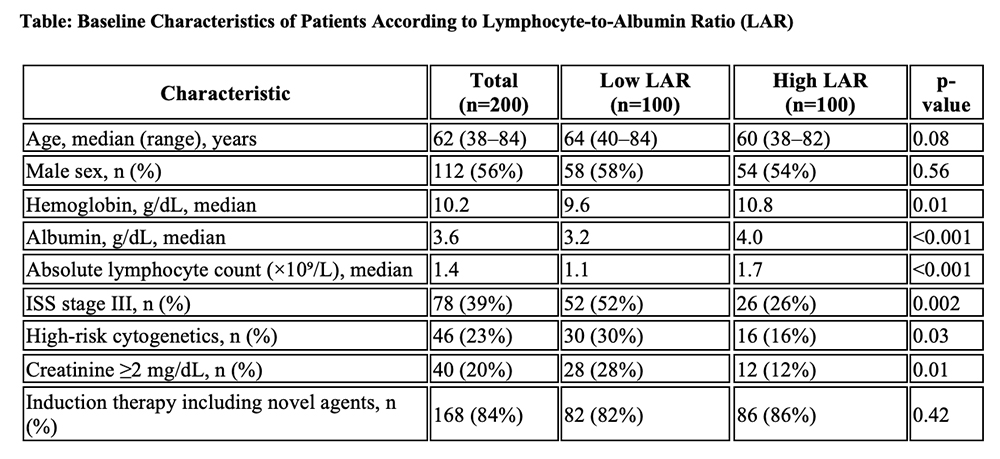
Results. A total of 200 patients were included in the analysis. The median age at diagnosis was 62 years, and 56% of patients were male. The median LAR value at diagnosis was 0.55. Patients in the low LAR group had lower hemoglobin and albumin levels and were more likely to present with advanced-stage disease compared with those in the high LAR group. Survival analysis demonstrated that patients with low LAR had significantly inferior outcomes. Both overall survival and progression-free survival were significantly shorter in the low LAR group compared with the high LAR group (OS: p = 0.003; PFS: p = 0.01). In multivariate Cox regression analysis, LAR remained an independent predictor of survival after adjustment for age, disease stage, and other relevant clinical variables.
Conclusions. A low lymphocyte-to-albumin ratio at diagnosis is associated with poorer overall and progression-free survival in patients with multiple myeloma. LAR is a simple, inexpensive, and readily available biomarker that may contribute to risk stratification and prognostic assessment in routine clinical practice.
Footnotes
Disclosures
No Conflict of interest.
Funding
No funding.
Figures & Tables
Article Information

This work is licensed under a Creative Commons Attribution-NonCommercial 4.0 International License.