
Abstract
Background. Multiple myeloma presents considerable variability in patient fitness and treatment eligibility, making real-world data crucial for understanding outcomes outside clinical trial settings. This retrospective nationwide study examined the effectiveness of bortezomib-based triplet regimens in transplant-ineligible newly diagnosed patients treated across the Czech Republic from 2007 to 2024. Throughout this period, therapeutic practice shifted in response to changing reimbursement policies, evolving dosing approaches and the broader availability of modern regimen options.
Methods. A total of 2281 patients were evaluated across four regimens: VMP, CVD, VTD and VRD. Data were obtained from the national RMG database. Treatment exposure, response rates, progression-free survival, overall survival and toxicity were assessed using IMWG criteria and standard statistical methods, including Kaplan-Meier estimates and log-rank testing. Subgroup analyses were performed for elderly patients, those with renal insufficiency, poor performance status and high-risk cytogenetic abnormalities.
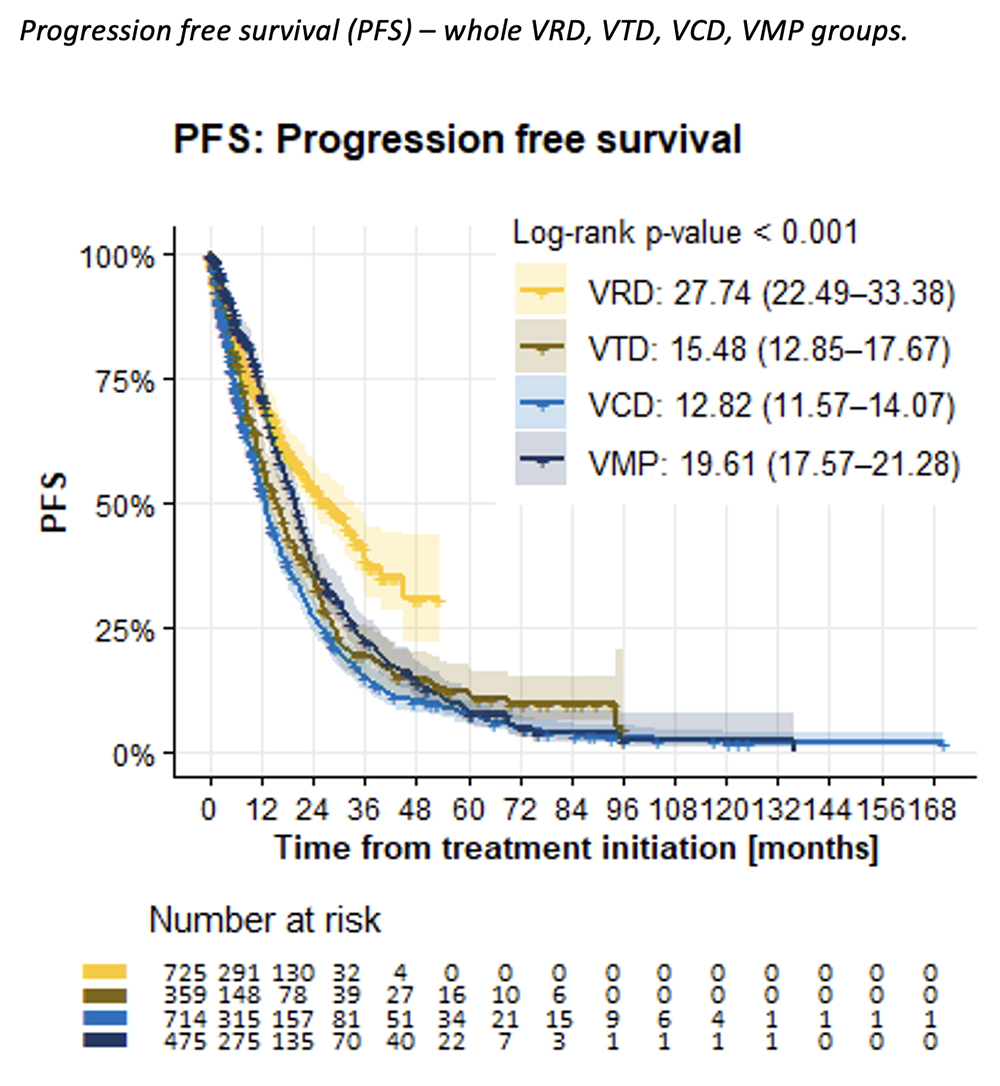
Results. VRD demonstrated the highest overall response rate (90.4%), the highest proportion of VGPR or better (66.7%) and the longest progression-free (27.7 months) and overall survival (43.0 months). Outcomes for VTD, CVD and VMP were inferior, though differences narrowed in patients over 75 years, with renal impairment or poor performance status. Toxicity-driven discontinuation was most frequent in VRD, accompanied by high rates of lenalidomide dose reductions and severe infections. VMP had the longest exposure to bortezomib due to historical reimbursement rules. In double-hit cytogenetics, VRD and VMP achieved relatively longer survival, although numbers were small.
Conclusions. VRD was the most effective regimen for transplant-ineligible newly diagnosed patients in the period before anti-CD38 therapy became available. However, toxicity and frailty significantly influenced treatment duration and outcomes, highlighting the need for individualized therapeutic decisions in older or comorbid patients. Long-term real-world data provide essential insights into effectiveness, tolerability and treatment patterns in routine clinical practice and help guide optimal first-line management, particularly for populations underrepresented in clinical trials.
Footnotes
Disclosures
No Conflict of interest.
Funding
No funding.
Figures & Tables
Article Information

This work is licensed under a Creative Commons Attribution-NonCommercial 4.0 International License.